


- Description
- Features
- Specs
- Inspection and Set-up
- Humidity Care
Grand Auditorium guitars from the 200 Series have always been a hit with players of all skill levels and styles, and the latest edition of the 214ce brings more of the crisp acoustic tone and smooth feel that musicians have come to expect from a Taylor. Layered Indian rosewood forms the back and sides here, with a solid Sitka spruce top that helps this guitar produce vibrant highs and a resonant, warm low end. That tonal balance makes this guitar an all purpose musical tool, versatile enough to pump out powerful cowboy chords and articulate enough to perform beautifully in more subtle styles such as flatpicking or fingerpicking. Appointments include crisp white binding, a three-ring rosette, and a Venetian cutaway for easy access to the higher notes on the fretboard. The guitar ships with ES2 electronics for organic, clean tone in amplified situations, and comes with a sturdy padded gig bag.
Grand Auditorium
Taylor's signature shape embodies the ultimate all-purpose acoustic.
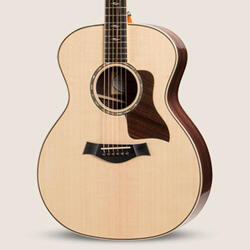
Sitka Spruce Top
The soundboard choice for most guitars, Sitka spruce produces a broad dynamic range and accommodates a versatile range of playing styles.

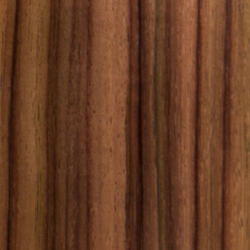
Layered Rosewood Body
A rosewood veneer and layered construction present a beautiful aesthetic in a durable, affordable package.
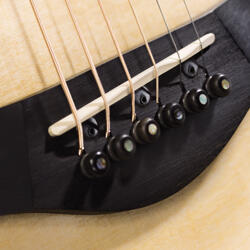
Expression System 2 Electronics
The Expression System 2 captures more of a guitar's dynamic properties using a breakthrough behind-the-saddle design.
Venetian Cutaway
The Venetian cutaway is known for its soft, round lines. The sloping peak of the cutaway will vary depending on the shape of the guitar.

Highlights
- Scale Length 25-1/2"
- Nut & Saddle Nubone Nut/Micarta Saddle
- Bracing X Bracing
- Truss Rod Cover Black Plastic
- Pickguard Tortoise
- Number of Frets 20
- Tuners Die-Cast Chrome
- Case Gig Bag
- Brand of Strings Elixir Phosphor Bronze Light
- Body Length 20"
- Body Width 16"
- Body Depth 4 5/8"
Body
- Binding/Edge Treatment None
- Top Finish Satin
- Back Config Layered
- Backstrap Finish None
- Rosette Size Three Ring
- Bridge Inlay None
- Back/Side Finish Satin
- Armrest Binding None
- Backstrap Wood None
- Rosette Mat. Plastic
- Stain/Sunburst None
- Wedge None
- Armrest no
Neck
- Neck Width 1-11/16"
- Fretboard Inlay 4mm Dot Italian Acrylic
- Fretboard Binding/Edge Treatment None
- Heel Cap Binding White
- Type of Neck Joint Taylor Neck
- Neck/Heel Tropical Mahogany
- Fretboard Wood West African Crelicam Ebony
- Neck Finish Satin
- Heel Length 3-1/2"
Peghead
- Peghead Finish Satin
- Peghead Binding None
- Peghead Type Standard
- Peghead Purfling None
- Headstock Overlay West African Crelicam Ebony
- Peghead Inlay None
- Peghead Logo Taylor Colorcore
Other
- Bridge Pins Black
- Buttons Chrome
- Fingerboard Ext None
- Edge Trim Black/White/Black
At Easy Music Center, we care for our instruments from the moment they arrive to when they ship to your door. All instruments are stored in a climate controlled environment and put through a 12-point inspection checklist before being shipped.
First, we check the finish of the instrument, carefully inspecting any blemishes on the surface. Next, we check the playability and setup by inspecting and adjusting the truss rod (if available), bridge, nut, and frets to manufacturer factory specifications. Any request made outside of manufacturer factory specifications can incur additional charges for parts and labor. If the instrument has electronics, we test all of the electronic components to make sure they are functioning properly.
After a thorough inspection, we then move on to maintenance. We start by lubricating any moving parts on the instrument, such as tuning machines. We then move on to cleaning and oiling the fretboard along with the frets.
Once maintenance is done, we stretch and tune the strings and play test the instrument. After this, we do a final inspection and clean/detail the instrument before packing it up for shipment.
We’re excited to be a part of your instrument buying experience.
Acoustic guitars and ukulele are made of wood, and wood is sensitive to changes in climate. Shifts in temperature or relative humidity can affect your instrument in multiple ways, some of which can lead to costly repairs if you’re not careful. Solid woods in particular are especially prone to the effects of climate fluctuation. For example, extended exposure to low relative humidity (below 40% RH) can dry out the wood, causing it to shrink and run the risk of cracking. Similarly, excessive humidity can cause the wood to absorb moisture and swell, potentially causing other problems. Without adequate humidity control (especially in drier local climates), acoustic instruments can crack and their necks can warp, causing problems with fretting, intonation and playability.
So how do you prevent this kind of damage? Easy: by keeping your guitars and ukulele properly humidified (ideally between 40-60% RH). The easiest way to do this is by storing your instruments in a case with a case two-way humidifier inside. A two-way humidifier will slowly absorb or release moisture inside your case, maintaining humidity to help ensure your instrument doesn’t suffer damage. Using a digital hygrometer can help you monitor humidity levels around your instrument.
Symptoms of a dry acoustic instrument:
- Low action. Strings are very close to the fretboard.
- Hump on the fretboard where the neck joins the body.
- Sunken top across the soundboard between bridge and fingerboard.
- The back of instrument looks very flat when it is dried out.
- Sharp fret ends extend beyond the edge of the fretboard.
- The plane of the neck angle on a dry instrument hits above the top of the bridge.
Symptoms of a wet acoustic instrument:
- High action. Strings that are unusually high off the fretboard, making it difficult to play.
- Unusually swollen top
- Unusual warp on the top, back or both at the end-block
- Improper neck angle. Sighting the neck to the bridge, the frets will appear to hit below the bridge.
The D’Addario Two-Way Humidification System
Using patented technology, the D’Addario Two-Way Humidification System features disposable, moisture-filled packets with a breathable membrane that provides two-way humidity control, meaning it can either release or absorb moisture to consistently maintain a predetermined relative humidity (RH) level of 45-50 percent.
Music Nomad Humilele Ukulele Humidifier
Music Nomad the leader in equipment care products, has developed an easy to use, no mess, and low maintenance Ukulele humidifier. The Humilele rests securely on top of the strings to safely and evenly hydrate your Ukulele to avoid these problems.
Final Notes on Humidity Control
To monitor the amount of humidity your instrument is receiving, we recommend the purchase of a digital hygrometer, a device that gauges and provides a read-out of humidity levels. It can be kept in the room where you store your instruments, or, better yet, in a central location inside the instrument case, preferably Velcro’d to the outside of the accessories compartment (facing the heel). The optimal range for your guitars and ukulele is 45-55% RH.